

What materials are used to make PTFE - Ring?
Jan 22, 2026
Hey there! As a supplier of PTFE-Rings, I often get asked about the materials used to make these nifty little things. So, I thought I'd break it down for you in this blog post.
What's PTFE Anyway?
First off, let's talk about PTFE. PTFE stands for Polytetrafluoroethylene. It's a synthetic fluoropolymer of tetrafluoroethylene. Sounds like a mouthful, right? But it's actually a super useful material. PTFE is known for its non - stick properties, which is why you often see it on cookware. But it has a whole bunch of other applications too, like in our PTFE - Rings.
The Base Material: Tetrafluoroethylene
The main ingredient in PTFE is tetrafluoroethylene (TFE). TFE is a colorless, odorless gas. It's made through a multi - step chemical process. First, you start with chlorodifluoromethane, which is reacted with hydrogen fluoride and then pyrolyzed. This pyrolysis step is crucial as it breaks down the compound to form TFE.
Once we have TFE, it undergoes a polymerization process. Polymerization is like building a long chain of molecules. In this case, the TFE molecules link together to form the PTFE polymer. This polymer has a unique structure where carbon atoms are in the center, surrounded by fluorine atoms. The strong carbon - fluorine bonds give PTFE its amazing properties, like high chemical resistance, low friction, and excellent thermal stability.
Additives and Fillers
While pure PTFE is great, sometimes we add additives and fillers to our PTFE - Rings to enhance certain properties.
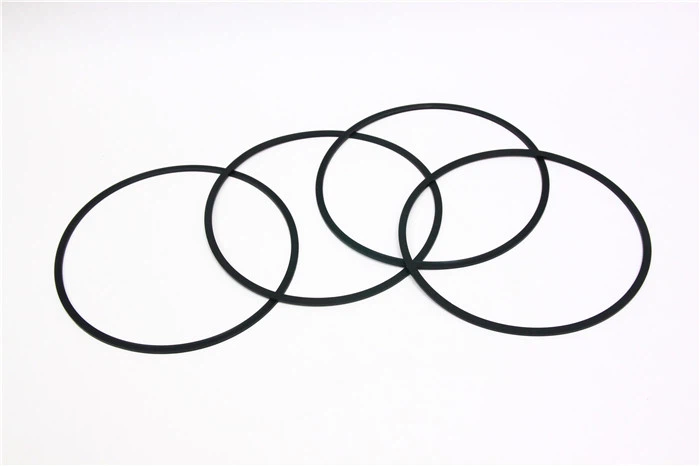
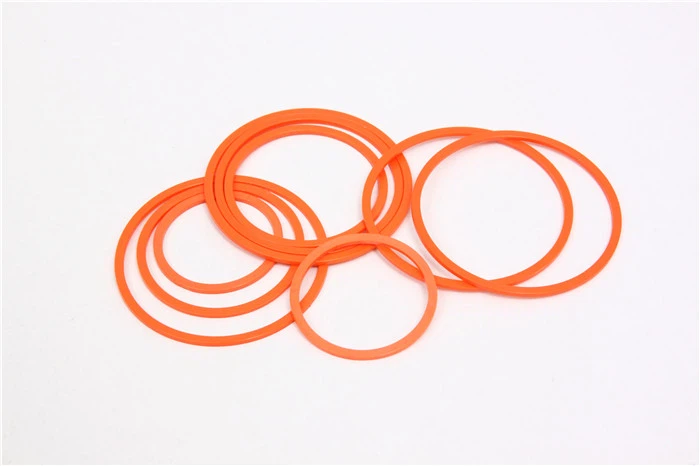
Glass Fiber
One common filler is glass fiber. Glass fiber is added to increase the mechanical strength of the PTFE - Ring. When you add glass fiber to PTFE, it helps the ring resist deformation under pressure. This is especially important in applications where the ring is going to be subjected to high loads. For example, in hydraulic systems, the PTFE - Rings need to be able to withstand the pressure of the fluid without losing their shape.
Carbon
Carbon is another filler we use. Carbon - filled PTFE - Rings have improved wear resistance. The carbon particles act as a lubricant within the PTFE matrix, reducing the friction between the ring and the mating surface. This is really useful in applications where there's a lot of movement, like in rotating shafts. The reduced friction means less wear and tear on the ring, which extends its lifespan.
Bronze
Bronze is also a popular filler. Bronze - filled PTFE - Rings have enhanced thermal conductivity. This is important in applications where heat needs to be dissipated quickly. For instance, in some industrial machinery, the PTFE - Rings can get hot due to friction. The bronze filler helps to transfer the heat away from the ring, preventing it from overheating and losing its properties.
Manufacturing Process
Now that we know the materials, let's briefly touch on how we make the PTFE - Rings.
First, the PTFE resin (either pure or with fillers) is compressed into a pre - form. This pre - form is then sintered in an oven at a high temperature. Sintering is the process of heating the material to a point where the particles fuse together, but without melting it completely. After sintering, the PTFE block is machined into the desired ring shape. We use precision machining techniques to ensure that the rings have the right dimensions and a smooth surface finish.
Why Our PTFE - Rings Are Great
As a supplier, we take pride in the quality of our PTFE - Rings. We carefully select the raw materials and use advanced manufacturing processes to ensure that our rings meet the highest standards. Our rings are resistant to a wide range of chemicals, which means they can be used in various industries, from chemical processing to food and beverage.
If you're looking for high - quality PTFE - Rings, check out our High Quality PTFE Back - up Ring. These rings are designed to provide excellent sealing performance and long - term reliability.
Let's Do Business
Whether you're in the automotive industry, aerospace, or any other field that requires reliable sealing solutions, we've got you covered. Our PTFE - Rings are available in different sizes and specifications to meet your specific needs.
If you're interested in purchasing our PTFE - Rings, don't hesitate to reach out. We're always happy to have a chat about your requirements and provide you with a quote. Let's work together to find the perfect PTFE - Ring solution for your business.
References
- "Handbook of Fluoropolymer Science and Technology" by Harry L. Resnik
- "Modern Fluoropolymers" edited by John Scheirs