Q: What is the purpose of the sealing ring?
A: The function of O rings is to seal a joining of two pieces to ensure that no air, gas or liquid can pass. Typically, they are fitted into a groove and designed to resist pressure. The resistance is what prevents air or liquid from escaping or entering the joining.Signet rings go by many names, including “seal rings” because of their function to seal letters, as well as a “gentleman's ring” because it was often worn by the male heirs in the family. In modern times, both men and women wear signet rings.
Q: What is O-ring sealing?
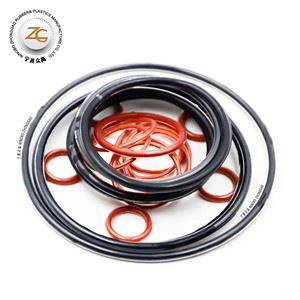
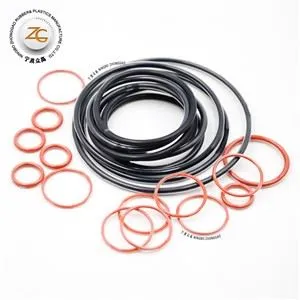
A: The O ring is a seal that is ring-shaped with a round cross-section, like a donut. They are basically rubber rings used as seals. O-rings are among the most widely used seals in machinery and equipment, as they are cheap, easy to produce, reliable and easy to fit.What do signet rings mean if you're female? The meaning of signet rings has changed since they were used by men to seal and sign documents. Now, signet rings are often given to either males or females to mark an individual's “coming of age”. They have come to symbolise the transition from childhood to adulthood.
Q: Why is sealing necessary?
A: With the right method, sealing not only ensures product safety and quality — it also has the potential to improve presentation and usability, resulting in a more appealing brand. On the flip side, inadequate seals can translate into poor product quality that could result in both financial and brand damage.Terminology note: Any o-ring can technically be called a gasket since they prevent the transfer of liquid and air, but while o-rings are a specific shape of gasket, any gasket cannot be called an o-ring.
Q: What is seal ring and mating ring?
A: Theory of operation A mechanical face seal consists of two parts — one that rotates and one that is stationary. The mating ring is the rotating member, mounted on the shafts, while the stationary seal assembly is installed into the housing bore.Ease of service, no smearing or retightening. No critical torque on tightening, therefore unlikely to cause structural damage. O-rings normally require very little room and are light in weight. In many cases an O-ring can be reused, an advantage over non-elastic flat seals and crush-type gaskets.
Q: What is the difference between sealing ring and O-ring?
A: One key difference between these two sealing components is their application range; oil seals have higher pressure resistance compared to O rings which make them ideal for high-pressure environments like engine parts while O-rings work well for lower-pressure assemblies like valves and pipes.
Q: Why do guys wear signet rings?
A: Many men proudly wear signet rings passed down through generations, connecting them to their ancestry and preserving their family's legacy. Traditionally, signet rings were crafted from noble metals like gold, silver, and platinum, elevating their status as valuable and enduring pieces of jewellery.
Q: Is an O-ring a gasket?
A: By definition, an O-ring is technically a gasket, but not all gaskets are O-rings. O-rings are made exclusively of an elastomer material, resulting in an elastic texture that's able to stretch and revert back to its natural shape and size without breaking. Gaskets, on the other hand, can be made of any material.An O-ring is a round elastomeric ring. O-rings are ideally suited to be a compressed, static seal between non moving parts. O-rings can be used as a face seal on a valve, and used on rotating shafts.
Q: What is seal ring made of?
A: Nitrile (Buna), Neoprene, Ethylene Propylene (EPDM Rubber), Silicone, Fluorocarbon (Viton), and PTFE (Teflon) are among the most commonly used compounds for O-rings and seals.Piston rings are used in cylinders for fluid sealing. They seal against the cylinder bore to prevent fluid from flowing across the cylinder head.
Q: What is the difference between seal and sealing?
A: Seals and sealings were two different forms of imprints. Both of them refer to the same object. Sealings were the instruments used to make seals that were essentially imprints. Seals were the instruments used to make sealings that were essentially imprints.
Q: What is sealing technology?
A: A device or material that is used to close off or fasten an opening or connection, especially to prevent the escape of a liquid or gas. In other words, a seal is a mechanical component used for keeping the fluid A and the fluid B apart. Figure 1. A sealing component keeps fluid A and fluid B separated.An O-ring prevents leaks by creating a durable, moisture-resistant seal that locks pressurized gas and water inside a system. O-rings seal by being compressed between two joined fittings, preventing any air or outside moisture from entering the closed system.
Q: What are the two purposes of a seal?
A: Although the O-ring was originally so named because of its circular cross section, there are now variations in cross-section design. The shape can have different profiles, such as an x-shaped profile, commonly called the X-ring, Q-ring, or by the trademarked name Quad Ring.Sealing devices serve the following functions: Prevent leakage of sealed lubricant from inside. Prevent entry of dust and foreign matter (dirt, water, metal powder, etc.) from outside.
A: These seals offer excellent compression set resistance, and both are designed to resist most oils and lubricants, especially petroleum-based lubricants. Viton and Buna seals also tolerate moderate temperature applications between 5°F and 250°F, making them optimal for general industrial use.
A: Because they have corners, flat O-rings can be used in addition to round O-rings to seal off spaces where the former cannot. For instance, as flat O-rings have a bigger surface area and offer better coverage when screwed, they can be employed as a seal between an automobile's oil filter and oil housing.Dynamic seals are the type of seals used to produce a barrier between stationary or moving surfaces in linear, oscillating, and rotary motion applications. These seals are used to separate or retain fluids, pressure, and remove contaminants.
Q: Why are O-rings made of rubber?
A: While O rings can be made of many different elastomers, some are widely used in a variety of applications. Nitrile Butadiene Rubber: Also known as NBR, this synthetic rubber copolymer provides superior resistance to chemicals, oils, and acids. It is puncture-resistant and functions at extremely low temperatures.The addition of a lubricant can extend the operating life of the O-ring by creating a barrier film over its surface. This barrier film can also help reduce leakage by filling the asperities between the metal surface and the O-ring seal.
Q: Why do people use O-rings?
A: The main purpose of O-rings is to prevent fluid or air from escaping as it acts as a sealing device. When the ring is squeezed between two surfaces, it takes up the clearance and then prevents any fluid or air from being released.O rings are used to block a path which may otherwise allow a liquid or a gas to escape. The o ring is placed into a groove to secure them in place, and then compressed between two surfaces.
Q: What should slip ring seals be installed with?
A: Use Teflon pipe tape or pipe sealant on NPT threads. As a guideline, NPT threads should be hand tight plus 1- 3 turns to seal the threads. When installing parallel threads, appropriate gaskets or o-rings should be used.Gaskets seal a connection between two components or flanges that have flat surfaces, while seals are used between engine parts, pumps, and shafts that rotate. Gaskets are used wherever a union or flange is required to prevent leaking. Gaskets are most commonly used as static seals.
Q: How is an O-ring and back up ring installed in a component?
A: It will withstand heat and presmust be smaller than the piston groove diameter, so that the O-ring is slightly stretched, fitting snugly in the groove. This stretch should be between 1%-5% with 2% as the ideal in most applications.sure to prevent leaks from occurring. Backup O-rings are placed behind the main O-ring. Each backup O-ring is used in conjunction with a separate main O-ring. The main O-ring is located directly around the mating surface of two parts.
Q: Should I use a gasket or an O-ring?
A: When you start the actual installation make sure that the oil seal is always facing the right direction. So, not facing outwards, but always with the spring facing the side of the medium to be sealed. The oil seal must then be pressed into the bore.O-Rings are the best choice for high-pressure applications as they can withstand extreme amounts without failure. While both sealing devices can function in a wide range of temperatures, gaskets are better suited for extreme temperature environments.
Q: What is a PTFE O-ring?
A: Polytetrafluoroethylene (PTFE) O-rings: Temperature & Chemical Resistant PTFE is a popular O-Ring material which is White in color. The PTFE O-Rings for use in applications which require a chemically resistant and non-compressible material. PTFE is the chemically inert of the O-ring materials.
Q: Can an O-ring replace a gasket?
A: If you need to replace a seal, it is critical to know if you need a gasket or an O ring. While both are seals, they are very different. Yes, they both keep liquids or gasses from exiting or entering a joining in a piece of machinery. But the two seals have significant differences and cannot be used interchangeably.Because they have corners, flat O-rings can be used in addition to round O-rings to seal off spaces where the former cannot. For instance, as flat O-rings have a bigger surface area and offer better coverage when screwed, they can be employed as a seal between an automobile's oil filter and oil housing.