

What is the production process of NBR X - Ring?
Jan 20, 2026
Hey there! As a supplier of NBR X-Rings, I'm super excited to take you through the production process of these amazing sealing components. So, let's dive right in!
Raw Material Selection
The first step in making NBR X-Rings is picking the right raw materials. NBR, or Nitrile Butadiene Rubber, is our go-to material. It's known for its excellent oil resistance, good mechanical properties, and affordability. We source high-quality NBR compounds from trusted suppliers. These compounds are carefully formulated to meet specific requirements, like hardness, tensile strength, and chemical resistance.
The choice of raw material is crucial because it directly affects the performance of the final product. For example, if you need a Wear Resistance NBR X-ring, we'll select a compound with enhanced wear-resistant properties. This ensures that the X-Ring can withstand the rigors of its application, whether it's in automotive engines, hydraulic systems, or industrial machinery.
Mixing
Once we have the raw NBR compound, it's time to mix it with other additives. These additives can include fillers, plasticizers, vulcanizing agents, and accelerators. The mixing process is done in a specialized mixer, where the ingredients are thoroughly blended together.
The goal of mixing is to create a homogenous compound with consistent properties. We carefully control the temperature, time, and speed of the mixer to ensure that all the ingredients are evenly distributed. This step is critical because any unevenness in the compound can lead to defects in the final X-Ring.
Preforming
After the mixing is complete, the compound is preformed into a shape that's close to the final X-Ring. This is usually done by cutting the compound into strips or sheets and then shaping them using molds or extrusion. Preforming helps to reduce the amount of material waste during the final molding process and ensures that the X-Ring has a more uniform shape.
Molding
Molding is the heart of the NBR X-Ring production process. There are several molding methods we can use, but the most common one is compression molding. In compression molding, the preformed compound is placed in a heated mold cavity. The mold is then closed, and pressure is applied to force the compound to fill the cavity and take the shape of the X-Ring.
The temperature and pressure during molding are carefully controlled to ensure proper vulcanization. Vulcanization is a chemical process that cross-links the polymer chains in the NBR compound, giving it its final properties. The molding time can vary depending on the size and complexity of the X-Ring, but it typically ranges from a few minutes to half an hour.
Vulcanization
As mentioned earlier, vulcanization is a crucial step in the production of NBR X-Rings. It transforms the soft, sticky compound into a hard, durable rubber product. During vulcanization, the vulcanizing agents in the compound react with the NBR polymer chains, creating cross-links between them.
The vulcanization process is affected by several factors, including temperature, time, and the type and amount of vulcanizing agents used. We carefully monitor these factors to ensure that the X-Ring has the right balance of properties, such as hardness, elasticity, and chemical resistance.
Trimming
After the X-Ring is molded and vulcanized, it may have some excess material, called flash, around its edges. Trimming is the process of removing this flash to give the X-Ring a clean, finished appearance. This can be done manually using knives or scissors, or it can be automated using trimming machines.
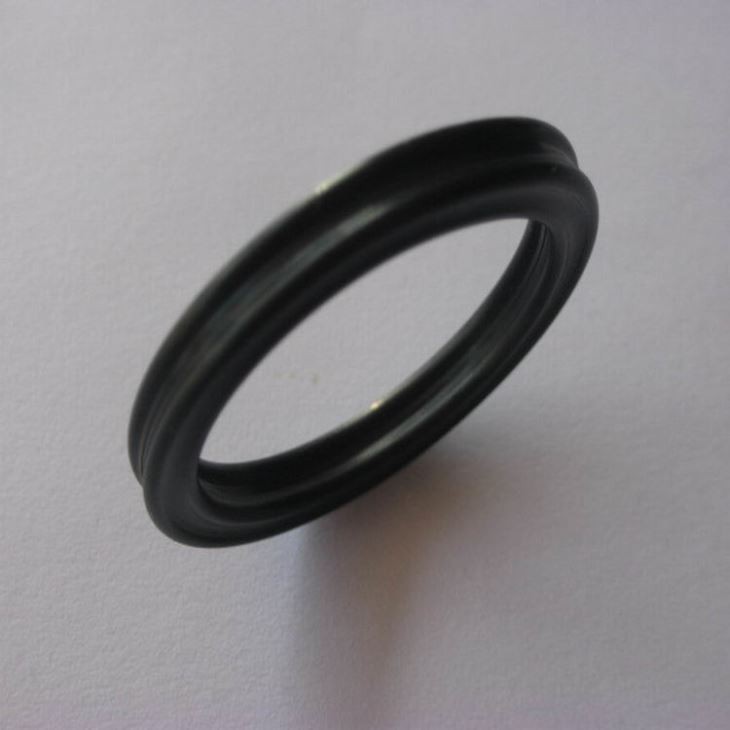

Trimming is an important step because it not only improves the aesthetics of the X-Ring but also ensures that it fits properly in its application. Any uneven or protruding flash can interfere with the sealing performance of the X-Ring.
Inspection
Once the X-Rings are trimmed, they go through a rigorous inspection process. We use a variety of inspection methods to check the quality of the X-Rings, including visual inspection, dimensional measurement, and performance testing.
Visual inspection is used to detect any surface defects, such as cracks, bubbles, or impurities. Dimensional measurement is done using precision instruments to ensure that the X-Rings meet the specified size and tolerance requirements. Performance testing can include tests for hardness, tensile strength, compression set, and chemical resistance.
Only X-Rings that pass all the inspection criteria are considered suitable for sale. This ensures that our customers receive high-quality products that meet their expectations.
Packaging
After the X-Rings have passed inspection, they are ready for packaging. We use a variety of packaging materials, such as plastic bags, boxes, or reels, depending on the customer's requirements. The packaging is designed to protect the X-Rings from damage during transportation and storage.
We also label the packages with important information, such as the product name, size, quantity, and batch number. This helps our customers to easily identify and manage their inventory.
Applications of NBR X-Rings
NBR X-Rings have a wide range of applications across various industries. In the automotive industry, they are used in engine seals, transmission seals, and brake systems. Their excellent oil resistance and durability make them ideal for these applications, where they need to withstand high temperatures and pressures.
In the hydraulic industry, NBR X-Rings are used in hydraulic cylinders, valves, and pumps. They provide a reliable seal that prevents fluid leakage and ensures the efficient operation of the hydraulic system.
In the industrial machinery industry, NBR X-Rings are used in a variety of equipment, such as compressors, conveyors, and machine tools. They help to keep the machinery running smoothly by preventing the ingress of dust, dirt, and moisture.
Why Choose Our NBR X-Rings
As a supplier of NBR X-Rings, we take pride in offering high-quality products at competitive prices. Our X-Rings are made from the best raw materials and are manufactured using state-of-the-art equipment and processes. We have a strict quality control system in place to ensure that every X-Ring we produce meets the highest standards.
We also offer a wide range of Rubber NBR X Ring sizes and specifications to meet the diverse needs of our customers. Whether you need a standard size or a custom-made X-Ring, we can provide it for you.
In addition to our high-quality products, we also offer excellent customer service. Our team of experts is always ready to answer your questions and provide you with technical support. We strive to build long-term relationships with our customers based on trust and mutual benefit.
Contact Us for Purchasing
If you're interested in purchasing NBR X-Rings, we'd love to hear from you. Whether you need a small quantity for a prototype or a large order for your production line, we can accommodate your needs. Just reach out to us, and our sales team will be happy to assist you with your order.
We're committed to providing you with the best products and services, so don't hesitate to contact us for any inquiries or to start a procurement discussion. We look forward to working with you!
References
- "Rubber Technology Handbook" by Werner Hofmann
- "Sealing Technology: Principles and Practice" by John H. Bickford