

What are the requirements for O Rings in abrasive environments?
Jan 05, 2026
When it comes to O rings used in abrasive environments, there are several crucial requirements that must be met to ensure optimal performance and longevity. As an O ring supplier, I understand the significance of these requirements and am here to share insights into what makes a suitable O ring for abrasive conditions.
Material Selection
The choice of material is paramount when dealing with abrasive environments. O rings need to be made from materials that possess high abrasion resistance. One such material is Nitrile Butadiene Rubber (NBR), which is well - known for its good mechanical properties and resistance to abrasion, as well as a wide range of oils and fuels. Our Customized Many Color NBR O ring is a great example of an NBR - based O ring designed to withstand wear and tear in abrasive settings.
Another excellent option is Perfluoroalkoxy (PFA) rubber. PFA offers exceptional chemical resistance in addition to high - wear resistance. The Yellow Color PFA Rubber Seal O Ring is a product engineered with PFA to meet the demands of harsh, abrasive environments. It can resist the degradation caused by abrasive particles and chemical agents, making it ideal for applications where both abrasion and chemical exposure are concerns.
Hardness
The hardness of an O ring plays a vital role in its performance in abrasive environments. Generally, a harder O ring is more resistant to abrasion. However, it's important to strike a balance. If the O ring is too hard, it may lose its ability to conform to the mating surfaces, reducing the sealing effectiveness. Typically, O rings for abrasive applications have a hardness range between 70 and 90 Shore A. This hardness range allows the O ring to resist the cutting and scraping action of abrasive particles while still maintaining a good seal.
Surface Finish
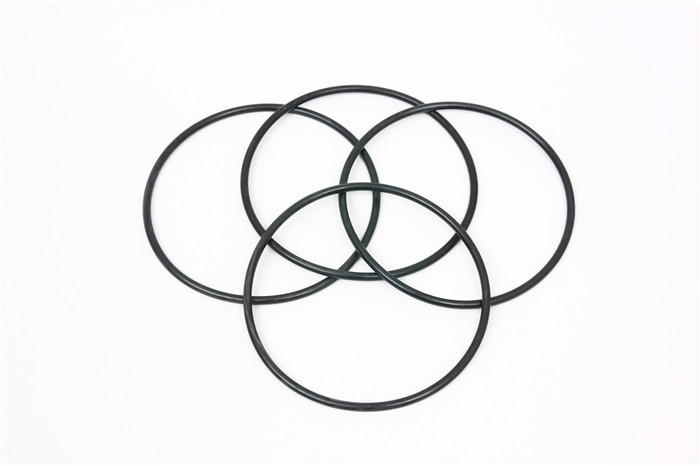
The surface finish of an O ring can significantly impact its performance in abrasive conditions. A smooth surface finish reduces the friction between the O ring and the mating surfaces, minimizing the wear caused by abrasive particles. During the manufacturing process, we pay close attention to achieving a high - quality surface finish on our O rings. This not only enhances their abrasion resistance but also improves the overall sealing performance. Our Custom Rubber Ring products are crafted with precision to ensure a smooth and consistent surface finish.
Compression Set Resistance
In abrasive environments, O rings are often subjected to continuous compression and movement. Compression set resistance is the ability of an O ring to return to its original shape after being compressed. A high compression set resistance is essential because it ensures that the O ring maintains its sealing properties over time. If an O ring has a high compression set, it may lose its ability to seal properly, leading to leaks and potential equipment failure. Materials like silicone and fluorocarbon rubbers are known for their good compression set resistance and can be suitable for abrasive applications where long - term sealing performance is required.

Tensile Strength and Elongation
Tensile strength refers to the maximum stress that an O ring can withstand before breaking, while elongation is the percentage increase in length of the O ring before it breaks. In abrasive environments, O rings need to have sufficient tensile strength and elongation to resist the forces generated by abrasive particles and the movement of mating parts. A high - tensile - strength O ring is less likely to tear or break when exposed to abrasive forces. Similarly, good elongation properties allow the O ring to stretch and deform slightly without failing, which is crucial in applications where there is some degree of movement or vibration.
Chemical Compatibility
In addition to abrasion, O rings in many industrial environments may also be exposed to various chemicals. It is essential to ensure that the O ring material is chemically compatible with the substances it will come into contact with. For example, if an O ring is used in a chemical - processing plant where it is exposed to acids or alkalis, the material must be resistant to those specific chemicals. Failure to consider chemical compatibility can lead to the degradation of the O ring, reducing its abrasion resistance and sealing effectiveness.
Design Considerations
The design of the O ring also affects its performance in abrasive environments. The cross - sectional shape and size need to be carefully selected to ensure proper fit and sealing. A well - designed O ring should be able to maintain a consistent seal even when subjected to abrasive forces. Additionally, the groove design in which the O ring sits is crucial. The groove should be sized and shaped correctly to prevent the O ring from extruding or being damaged by abrasive particles. Our engineering team has extensive experience in designing O rings and their corresponding grooves to optimize performance in abrasive environments.
Testing and Quality Assurance
To ensure that our O rings meet the requirements for abrasive environments, we conduct rigorous testing. This includes abrasion testing, where the O ring is exposed to abrasive materials under controlled conditions to evaluate its wear resistance. We also perform compression set testing, tensile strength testing, and chemical compatibility testing. By adhering to strict quality control standards, we can guarantee that our O rings are reliable and durable in abrasive applications.
Conclusion and Call to Action
In conclusion, the requirements for O rings in abrasive environments are multifaceted, involving material selection, hardness, surface finish, compression set resistance, tensile strength, chemical compatibility, and design. As an O ring supplier, we are committed to providing high - quality O rings that meet these requirements. Our Custom Rubber Ring, Yellow Color PFA Rubber Seal O Ring, and Customized Many Color NBR O ring are just a few examples of our products that are designed to excel in abrasive conditions.
If you are in need of O rings for abrasive applications, we invite you to contact us for a detailed discussion about your specific requirements. Our team of experts is ready to provide you with the best solutions and support for your sealing needs.
References
- "Handbook of Elastomers" by I. I. Rubin, provides in - depth knowledge on elastomer materials used in O ring manufacturing.
- "Sealing Technology: Principles and Practice" by John H. Bickford, offers insights into the design and performance of sealing components in various environments.