

What are the antibacterial properties of FKM X - Ring?
May 12, 2025
As a reliable supplier of FKM X - Rings, I'm often asked about the antibacterial properties of these essential sealing components. In this blog, I'll delve into the scientific aspects of FKM X - Rings' antibacterial capabilities, providing in - depth insights for those interested in these high - performance products.

What is FKM X - Ring?
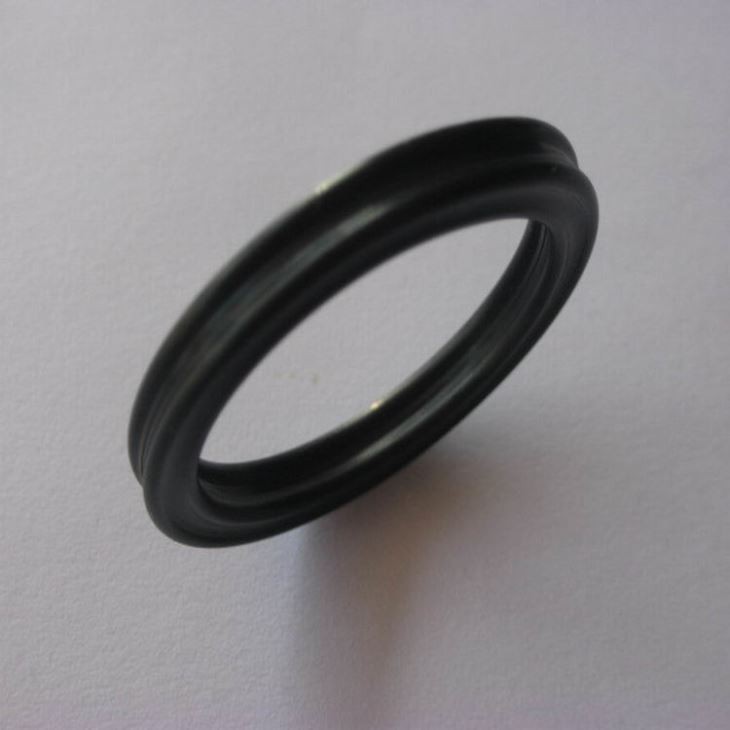
FKM, or Fluoroelastomer, is a synthetic rubber known for its excellent resistance to high temperatures, chemicals, and fuels. The X - Ring, also known as a Quad Ring, is a sealing ring with a cross - section shaped like an "X". This unique design offers several advantages over traditional O - rings, such as better sealing performance, reduced friction, and less chance of rolling or twisting in the groove.
FKM X - Rings are widely used in various industries, including automotive, aerospace, chemical processing, and food and beverage. Their ability to withstand harsh environments makes them a popular choice for applications where reliable sealing is crucial.
Antibacterial Mechanisms of FKM X - Rings
The antibacterial properties of FKM X - Rings can be attributed to several factors. Firstly, the chemical composition of FKM itself plays a significant role. Fluoroelastomers have a highly fluorinated backbone, which gives them a low surface energy. This low surface energy makes it difficult for bacteria to adhere to the surface of the FKM X - Ring.

When bacteria come into contact with a surface, they need to adhere to it in order to colonize and form biofilms. The smooth and non - sticky surface of FKM X - Rings reduces the initial attachment of bacteria. For example, studies have shown that in environments with high bacterial loads, such as water treatment plants or food processing facilities, FKM X - Rings accumulate significantly less bacterial biomass compared to other rubber materials.
Secondly, some FKM compounds can be formulated with antibacterial additives. These additives can either be incorporated into the rubber matrix during the manufacturing process or applied as a surface coating. Common antibacterial additives include silver nanoparticles, which have well - known antibacterial properties. Silver ions can disrupt the cell membranes of bacteria, inhibit their metabolic processes, and ultimately lead to their death.
In addition to silver nanoparticles, other antibacterial agents such as copper compounds and certain organic antimicrobial agents can also be used. These additives can provide long - term antibacterial protection, especially in applications where the FKM X - Rings are exposed to bacteria - rich environments for extended periods.
Applications Benefiting from Antibacterial FKM X - Rings
Food and Beverage Industry
In the food and beverage industry, maintaining a hygienic environment is of utmost importance. FKM X - Rings with antibacterial properties are used in pumps, valves, and pipelines to prevent the growth of bacteria and other microorganisms. For example, in dairy processing plants, FKM X - Rings can be used in milk storage tanks and transfer lines. The antibacterial properties of these rings help to ensure that the milk remains free from contamination, reducing the risk of spoilage and foodborne illnesses.

Medical and Pharmaceutical Industry
In medical and pharmaceutical applications, FKM X - Rings are used in devices such as syringes, catheters, and drug delivery systems. The antibacterial properties of these rings are crucial to prevent the growth of bacteria on the device surfaces, which could lead to infections in patients. For instance, in a hospital setting, an antibacterial FKM X - Ring in a syringe can help to maintain the sterility of the medication being administered.
Water Treatment and Sanitary Applications
In water treatment plants, FKM X - Rings are used in pumps, filters, and valves. The antibacterial properties of these rings are essential to prevent the growth of bacteria in the water distribution system. In addition, in sanitary applications such as faucets and showerheads, antibacterial FKM X - Rings can help to keep the water clean and free from harmful microorganisms.
Comparison with Other Rubber Sealing Rings
When comparing FKM X - Rings with other rubber sealing rings, such as Rubber NBR X Ring and Wear Resistance NBR X - ring, in terms of antibacterial properties, FKM X - Rings generally have an edge.
NBR (Nitrile Butadiene Rubber) is a common rubber material used for sealing applications. While NBR has good oil resistance and mechanical properties, it does not have the same level of antibacterial capabilities as FKM. NBR has a higher surface energy, which makes it more prone to bacterial adhesion. Moreover, NBR is not as resistant to high temperatures and chemicals as FKM, which limits its use in some applications where antibacterial properties are required in harsh environments.
Another type of rubber ring is the Rubber NBR Y - Ring. Similar to NBR X - Rings, NBR Y - Rings also lack the inherent antibacterial properties of FKM X - Rings. The design of the Y - Ring is different from the X - Ring, but in terms of antibacterial performance, FKM X - Rings are often the better choice, especially in applications where a high level of hygiene is required.
Testing and Certification of Antibacterial FKM X - Rings
To ensure the effectiveness of the antibacterial properties of FKM X - Rings, various testing methods are available. One common method is the agar diffusion test, where the FKM X - Ring is placed on an agar plate inoculated with bacteria. After a certain incubation period, the zone of inhibition around the ring is measured. A larger zone of inhibition indicates better antibacterial activity.
In addition to in - vitro testing, some manufacturers also conduct in - situ testing in real - world applications. This involves monitoring the bacterial growth on FKM X - Rings installed in actual equipment over a period of time.
There are also several international standards and certifications related to antibacterial materials. For example, ISO 22196 provides a method for measuring the antibacterial activity of plastic and other non - porous surfaces. FKM X - Rings that meet these standards can provide customers with greater confidence in their antibacterial performance.
Future Developments in Antibacterial FKM X - Rings
The demand for antibacterial FKM X - Rings is expected to grow in the future, especially in industries where hygiene and safety are top priorities. Researchers are constantly exploring new ways to enhance the antibacterial properties of FKM X - Rings.
One area of research is the development of more effective antibacterial additives. For example, new types of nanoparticles with enhanced antibacterial activity are being investigated. These nanoparticles can be designed to have better dispersion in the FKM matrix, providing more uniform antibacterial protection.
Another area of development is the improvement of the surface treatment of FKM X - Rings. Surface modification techniques can be used to create a more antibacterial surface without compromising the mechanical and chemical properties of the FKM.
Contact Us for Purchase and Negotiation
If you are interested in our FKM X - Rings with excellent antibacterial properties, we welcome you to contact us for purchase and negotiation. Our team of experts can provide you with detailed product information, technical support, and customized solutions based on your specific requirements. Whether you are in the food and beverage industry, medical field, or any other industry that requires reliable sealing solutions, our FKM X - Rings are the ideal choice.
References
- ASTM D1418 - 19 Standard Terminology for Rubber and Rubber Latices – Nomenclature.
- ISO 22196:2011 Plastics — Measurement of antibacterial activity on plastics surfaces.
- “Antibacterial Activity of Silver Nanoparticles: A Surface Science Insight.” Journal of Physical Chemistry C, 2010.