

How do I handle static electricity when working with an O Ring Kit?
Nov 20, 2025
Hey there! As a supplier of O Ring Kits, I've dealt with my fair share of challenges, and one of the most pesky ones is static electricity. You might be wondering, "Why's static electricity such a big deal when working with an O Ring Kit?" Well, let me break it down for you.
First off, static electricity can cause some serious problems in the manufacturing and handling of O Ring Kits. When you're dealing with these tiny but crucial components, static can attract dust and debris. That's a big no - no because any foreign particles on an O Ring can compromise its sealing performance. Imagine a PTFE Encapsulated Silicone Black Color O Ring that's supposed to create a tight seal in a high - pressure system. If there's dust stuck to it due to static, it won't seal properly, and that can lead to leaks and all sorts of headaches.
So, how do I handle static electricity when working with an O Ring Kit? Let's start with the environment. The first thing I do is control the humidity in my workspace. Dry air is a breeding ground for static electricity. When the air is dry, electrons can easily build up on surfaces, including the O Rings. I use a humidifier to keep the relative humidity in the range of 40 - 60%. This makes the air more conductive, allowing the static charges to dissipate more easily. It's like giving the static electricity an escape route.
Another important step is to use anti - static materials. I make sure that all the containers, trays, and tools I use to handle the O Ring Kits are made of anti - static materials. For example, instead of using regular plastic trays, I opt for anti - static plastic trays. These trays have additives that help to prevent the build - up of static charges. The same goes for the gloves I wear. I use anti - static gloves to handle the O Rings directly. This way, I'm not transferring any static from my hands to the O Rings.
Grounding is also a key part of my static - handling strategy. I have all my equipment, like workbenches and machinery, properly grounded. Grounding provides a path for the static charges to flow safely into the ground. For instance, if there's a static charge on a machine that's used to assemble the O Ring Kits, the grounding wire will allow that charge to dissipate into the earth, preventing it from causing any damage to the O Rings. I also use grounding straps when working with the O Rings. A grounding strap is a simple device that I wear around my wrist, and it's connected to a ground source. This ensures that any static charge on my body is constantly being drained away.
Now, let's talk about the O Rings themselves. Some types of O Rings are more prone to static build - up than others. For example, Black O Ring made from certain materials might attract more static. In these cases, I can treat the O Rings with anti - static sprays. These sprays create a thin, conductive layer on the surface of the O Rings, which helps to prevent the build - up of static charges. However, I have to be careful when using these sprays because some chemicals in them could potentially damage the O Rings. So, I always test the spray on a small sample first to make sure it's compatible.
When it comes to transporting the O Ring Kits, I take extra precautions. I use anti - static packaging materials. These materials are designed to protect the O Rings from static electricity during transit. For example, I use anti - static bags to store the O Rings. These bags have a special coating that prevents static charges from building up on the outside and affecting the O Rings inside. I also make sure that the boxes I use to ship the O Ring Kits are lined with anti - static foam. This provides an extra layer of protection against static.
In addition to these practical steps, I also train my staff on the importance of static - handling. I make sure that everyone who works with the O Ring Kits understands how static electricity can affect the products and knows the proper procedures for handling them. This includes things like using the anti - static materials correctly, following the grounding procedures, and being aware of the humidity levels in the workspace.
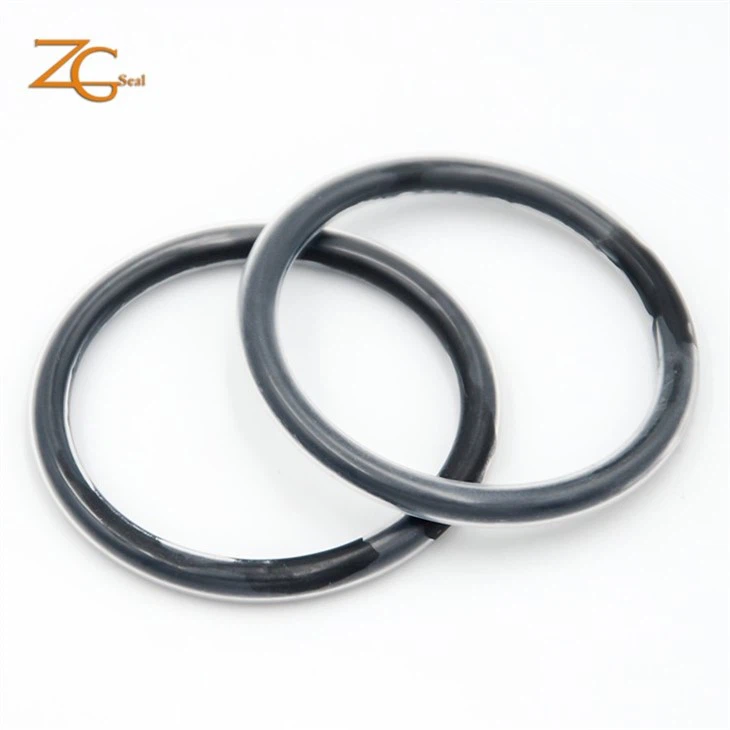

Now, you might be thinking, "That's all well and good, but why should I buy O Ring Kits from you?" Well, as a supplier, I take static electricity seriously because I know how important it is to deliver high - quality O Ring Kits. By implementing these static - handling measures, I can ensure that the O Rings I supply are free from any static - related damage. Whether you need a O Ring for a simple household application or a complex industrial system, you can trust that my O Ring Kits will perform as expected.
If you're in the market for O Ring Kits and want to ensure that you're getting products that are well - protected against static electricity, I'd love to have a chat with you. Whether you have a specific requirement or just want to learn more about our products, feel free to reach out. I'm always happy to discuss your needs and provide you with the best solutions.
References
- ESD Association. (2023). Fundamentals of Electrostatic Discharge.
- Industrial Hygiene Guide for Control of Static Electricity. Occupational Safety and Health Administration.