

Working with O-ring kits for equipment repair and industrial assembly often leads to unexpected leakage, even when the selected part appears to be correct. This guide covers practical selection and installation best practices, with straightforward guidance for maintenance teams, buyers and DIY users.
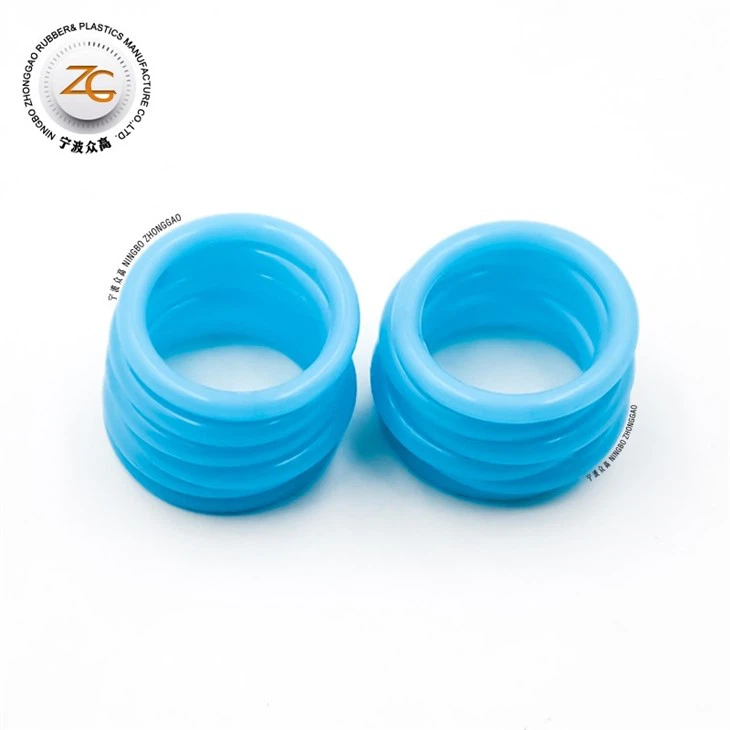

First, an important point: O-rings within a kit are not interchangeable. Selecting a random O-ring without matching the material to the working media is a common cause of early failure. For food-contact applications, food-grade silicone is suitable. Our Blue Silicone O-rings offer heat resistance and are widely used for appliances, food containers and suitable medical assemblies. For oil and hydraulic fluid environments, NBR is the preferred material. Our Yellow Colour Coating NBR Seal O-ring delivers good compatibility with oils and fuels, outperforming silicone in these services. Custom O-ring kits are also available, where you can specify sizes and materials to match your equipment requirements: Factory Customize Rubber Seal O-ring.
Even with the correct material, dimension matching is critical. Measuring a worn, stretched or compressed old O-ring with a regular ruler will produce inaccurate results. O-rings are defined by inner diameter (ID) and cross-section (CS). The most reliable method is to refer to the original equipment manual for the specified ID and cross-section. If documentation is unavailable, use a digital caliper to measure the gland groove itself, which is the true reference dimension. For example, a groove designed for 20 mm ID and 2.5 mm cross-section should not use an O-ring with 3 mm cross-section; oversize cross-section leads to poor seating, while undersize creates leakage. All our kits include a printed size chart on packaging for convenient gland matching.
Surface preparation is frequently overlooked. Installing an O-ring without cleaning the groove and mating surface is a common source of leaks. Fine dust, lint, scratches, burrs or residual old seal material can prevent full sealing contact. Before installation, clean the gland using a lint-free microfiber cloth. Inspect mating surfaces for burrs and scratches. Minor sharp edges can be smoothed with fine 600-grit sandpaper, and residual contaminants can be removed with isopropyl alcohol. Avoid unnecessary stretching of the O-ring. Lubrication compatible with the seal material is recommended for assembly. Silicone-compatible lubricant is used for silicone O-rings, while NBR requires compatible lubricants. Higher-grade kits may include matching lubricant packets. WD-40 is not recommended, as it can degrade many elastomer materials over time.
Correct seating is essential. The O-ring must lie flat inside the gland without twisting. A twisted O-ring creates localized weak points and leakage. After placing the seal into the groove, run a finger gently around the circumference to confirm the ring is smooth and free of kinks. When tightening the fitting, avoid excessive torque. O-rings require a controlled compression range. Insufficient compression causes leakage, while over-compression results in tearing or permanent compression set. Equipment manuals provide the recommended torque value. Without torque specifications, hand-tighten first, then apply light wrench force until firm resistance is reached. Over-tightening can damage valve housings and fittings.
For extreme operating conditions such as high or low temperatures and aggressive chemicals, verify the material specification and quality controls of the O-ring. Our industrial and commercial O-ring kits are produced under ISO 9001 quality management system controls for consistent manufacturing quality. For heavy-duty automotive and machinery applications, our OEM Silicone Core PFA Rubber Seal O-ring combines silicone flexibility with PFA chemical resistance for extended service life.
Below are common mistakes that lead to leakage even after careful selection:
Reusing old O-rings. Used seals have already experienced compression set and lose elastic recovery, so replacement with a new O-ring from the kit is recommended.
Improper material cross-use. Silicone and NBR are formulated for different media and cannot be swapped arbitrarily; mismatched materials create leakage or safety risks.
Worn or incorrectly sized glands. If the groove is damaged or modified, even a perfectly sized standard O-ring will not seal reliably. Custom O-rings can be manufactured to fit altered gland dimensions via our Factory Customize Rubber Seal O-ring line.
A practical verification step: after installation and tightening, perform a low-pressure test using air, water or the system working fluid where possible, and inspect for drips before putting the equipment into full service. Minor leaks often come from unseen twists or debris trapped under the seal.
Successful O-ring installation from a kit relies on simple but critical details: match the elastomer to the working fluid, select dimensions based on gland geometry, clean all contact surfaces, seat the seal flat and avoid over-tightening.
If you need support selecting O-rings or building custom kits for your project, our team can provide application guidance. We support both DIY repair and heavy industrial equipment requirements. Reach out for custom quotations or further product information.
This guidance is built on widely accepted elastomer and sealing industry principles.


