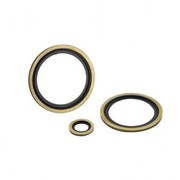
Performance and advantages and disadvantages of silicone sealing rings
May 22, 2025
As a widely used sealing material, silicone sealing rings occupy an important position in many industrial fields with their unique performance and advantages. This article will analyze the functional characteristics, advantages, and disadvantages of silicone sealing rings in detail to help readers better understand and apply this material.
First, let's take a look at the functional characteristics of silicone sealing rings. Silicone sealing rings have good sealing performance and can maintain good sealing effects in different working atmospheres, pressures, and temperatures. Its sealing performance is not only stable but can also be automatically adjusted and improved according to actual use to ensure the stability and safety of system operation. In addition, silicone sealing rings also have good chemical corrosion resistance, good resistance to acid, alkali, and some organic solvent environments, and can maintain a long-term working life in various complex environments.
Silicone sealing rings also have excellent heat resistance and cold resistance and can be used for a long time in a wide temperature range of -60~250℃ and will not undergo significant performance changes due to temperature changes. At the same time, silicone sealing rings also have good insulation properties, including high volume resistance and a strong breakdown field, which are suitable for the sealing requirements of electrical equipment. In addition, silicone sealing rings also have high air permeability and selectivity for gas passage and have a good gas isolation effect.
However, silicone seals also have some defects. First, the impact toughness of silicone seals is relatively low, and they are easily affected by mechanical stress and shear force, which is not suitable for high-toughness mechanical environments. Secondly, the wear resistance of silicone seals is weak, and they are easy to tear and wear. Therefore, care should be taken when using them in some high-friction environments. In addition, the production cost of silicone seals is relatively high and may not be suitable for some economic considerations.
In general, silicone seals have the advantages of good sealing, chemical corrosion resistance, heat and cold resistance, good insulation, and high air permeability, and are suitable for various industrial fields. However, when selecting materials, their low impact toughness, weak wear resistance, and high cost should also be fully considered. In practical applications, the advantages and disadvantages of silicone seals should be weighed according to the specific use environment and needs, and the most suitable sealing materials should be selected to ensure the stable operation of the system and extend its service life.
At the same time, with the continuous development of science and technology, in order to meet the growing industrial needs, we look forward to the emergence of more sealing materials with superior performance and low cost in the future. For silicone seals, it is expected that through material modification and process optimization, its performance will be further improved, its shortcomings will be overcome, and a full range of sealing solutions will be provided for more fields.
Understanding the performance, advantages, and disadvantages of silicone seals will help us better apply this material and provide strong guarantees for the stable operation and extended service life of equipment. At the same time, we also look forward to more innovations and breakthroughs in the future to promote the development of the sealing material field.