Performance, Advantages, and Disadvantages of Silicone Sealing Rings
Jun 03, 2026

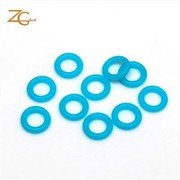
As a widely utilized sealing material, silicone sealing rings occupy a significant position in numerous industrial sectors due to their unique properties and advantages. This article provides a detailed analysis of the functional characteristics, advantages, and disadvantages of silicone sealing rings.
First, let us examine the functional characteristics of silicone sealing rings. Silicone sealing rings exhibit excellent sealing capabilities, maintaining effective sealing performance across a variety of operating environments, pressures, and temperatures. Their sealing performance is not only stable but also capable of self-adjustment and improvement based on actual operating conditions, thereby ensuring the stability and safety of the system. Furthermore, silicone sealing rings possess excellent chemical resistance; they demonstrate strong resilience against acids, alkalis, and certain organic solvents, allowing them to maintain their operational lifespan over extended periods in various complex environments.
Silicone sealing rings also boast exceptional heat and cold resistance, enabling long-term use across a broad temperature range of -60°C to 250°C without undergoing significant changes in performance due to temperature fluctuations. Additionally, these rings exhibit excellent electrical insulation properties-including high volume resistivity and high dielectric strength-making them suitable for meeting the sealing requirements of electrical equipment. Moreover, silicone sealing rings feature relatively high gas permeability and selective gas transmission properties, resulting in effective gas isolation capabilities.
However, silicone sealing rings do have certain limitations. First, their impact toughness is relatively low; they are susceptible to mechanical stress and shear forces, making them unsuitable for mechanical environments requiring high toughness. Second, their abrasion resistance is relatively weak, rendering them prone to tearing and wear. Consequently, caution should be exercised when utilizing them in environments characterized by high friction. Furthermore, the production cost of silicone sealing rings is relatively high, which may render them unsuitable for applications subject to strict economic constraints.
In summary, silicone sealing rings offer numerous advantages-including excellent sealing capabilities, chemical resistance, thermal and cryogenic stability, superior electrical insulation, and high gas permeability-making them suitable for a wide range of industrial applications. Nevertheless, when selecting a material, one must carefully consider their limitations: namely, their low impact toughness, limited abrasion resistance, and high cost. In practical applications, it is essential to weigh the advantages and disadvantages of silicone sealing rings against the specific operating environment and requirements to select the most appropriate sealing material, thereby ensuring the stable operation of the system and extending its service life. Meanwhile, driven by the continuous advancement of science and technology-and in order to meet ever-growing industrial demands-we anticipate the emergence of even more high-performance, cost-effective sealing materials in the future. Specifically regarding silicone sealing rings, it is expected that through material modification and process optimization, their performance will be further enhanced and their inherent limitations overcome, thereby enabling them to provide comprehensive sealing solutions across an even wider range of fields.
In short, a thorough understanding of the properties, strengths, and limitations of silicone sealing rings facilitates their optimal application, thereby providing a robust guarantee for the stable operation and extended service life of equipment. At the same time, we look forward to future innovations and breakthroughs that will continue to drive the advancement of the sealing materials sector.